
IT support and services for organizations that demand accountability.
Managed IT, cybersecurity and compliance, cloud and business continuity, AI and automation, and fractional CTO advising for organizations across Greater Boston. One accountable stack, not a shelf of products. We don’t stop at managing tickets. We build stronger businesses.
Each one opens with the problems it solves and how we solve them. Managed IT covers three categories: full managed IT, co-managed IT, and consulting.
One stack, not separate products.
Managed IT is the operating floor, delivered as full managed IT, co-managed IT, or consulting. Cybersecurity, cloud, and automation sit on top of it. And fractional CTO advising is the layer that decides what everything below it should be doing for the next eighteen months.
Decides
What the next eighteen months should be, and what it costs
Fractional CTO and vCIO advising
The eighteen-month roadmap, the budget, and the risk register, owned at your planning table.
Protects and enables
The day-to-day, so it can be relied on
Cybersecurity and compliance
Risk reduction, audit readiness, and the evidence a carrier or funder asks for.
Cloud and business continuity
Hosting, migration, identity, and tested recovery, so access follows the person.
AI and process automation
Policy, oversight, and the automations that buy back hours you are paying for today.
Operates
Everything above it, every day
Managed IT
Monitoring, maintenance, lifecycle, and backup, delivered as full managed IT, co-managed IT, or consulting.
Your industry changes the order, not the stack.
Your priorities, compliance requirements, and budget cycles shape how we deliver our services. Explore your industry below to see how we put that understanding to work.
Grant cycles, funder diligence, and donor data, with staff time you cannot spare on technology.
- Cybersecurity and compliance readiness
- Cloud architecture and IT infrastructure
Portfolio-wide standards, leasing office uptime, and the fraud controls that protect a closing.
- Fully managed and co-managed IT readiness
- Technology planning for facilities and expansion
CJIS, state records, procurement cycles, and continuity for services the public depends on.
- Cybersecurity and compliance readiness
- IT strategy, budgeting, and cost optimization
Testing windows, Chromebook fleets, FERPA, and a summer that is the only implementation window you get.
- Fully managed and co-managed IT readiness
- Business continuity and disaster recovery readiness
- Eduverse virtual reality for education demo
Owner-minded leadership for a business where nobody currently owns the technology decisions.
- AI and workflow automation opportunities
- IT strategy, budgeting, and cost optimization
Managed IT with one team accountable for it.
Day-to-day technology handled by a named team that knows your environment, monitors it before you notice a problem, and plans the replacement of every part of it. It comes in three shapes, depending on how much of it you want to keep in house.
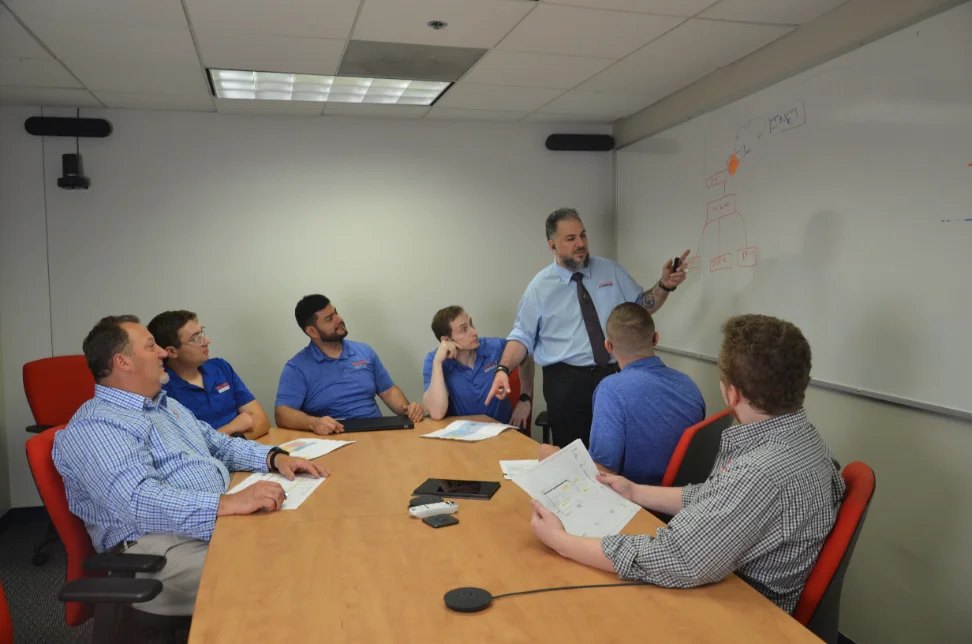
For organizations with no internal IT. We own the whole environment: monitoring, maintenance, support, lifecycle, and backup.
For organizations that already have IT staff. Your team keeps the relationships; we add the bench, the escalation path, and after-hours coverage.
For a defined question or project. Assessments, migrations, buildouts, and vendor selection, scoped and finished.
What it is costing you today
Every hour your team loses to technology is an hour of payroll spent on something other than the work you hired them for.
One person quietly holds all the institutional knowledge about your systems, and that is a single point of failure with a resignation date.
Hardware and software get replaced when they fail rather than when they should, so the emergency purchase always costs more than the plan would have.
All three are the same failure in different clothing: nobody is watching the environment between incidents.
How we solve it
- Monitoring and proactive maintenance, so most issues are closed before anyone reports them
- A named advisory team who knows your environment, not a rotating queue
- Asset and lifecycle management, so replacement is forecast rather than discovered
- Patching, verified backups, and documentation kept current and handed to you
- Onboarding and offboarding run end to end, including access removal on the last day
- Project delivery that finishes: migrations, integrations, office and site buildouts
- Vendor selection, contract review, and renewal governance on your calendar
- Regular reviews that report outcomes, not ticket counts
UPDATE “That is the sign of a good service provider.”
A client since
Years in practice
Longest relationship, years
Cybersecurity you can prove, not just claim.
Risk reduction, compliance, audit readiness, and cyber-insurance readiness, handled as one program rather than a stack of products. Our job is to make the honest answer to a security question a document we can hand you.
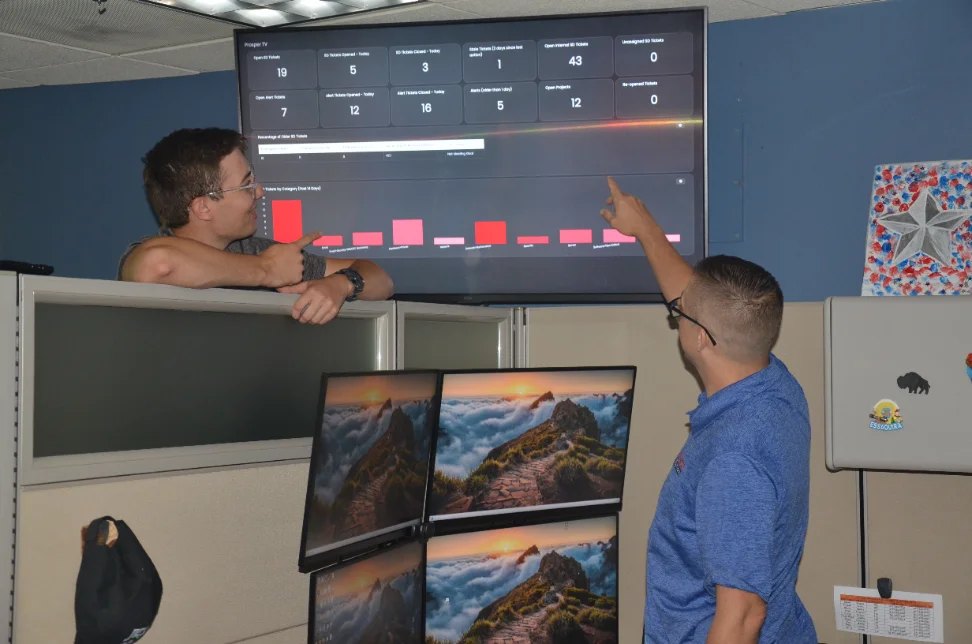
What it is costing you today
Your cyber-insurance application asks you to attest to controls you may not actually have in place, and an inaccurate answer can void the claim.
Clients, funders, and insurers now send security questionnaires before they will sign. Every question you cannot answer with evidence puts the contract or the renewal at risk.
Recovering from an incident without a tested plan costs several times what preventing it would have.
None of this is written to frighten you. Every item above has a control behind it and a document that proves the control is in place.
How we solve it
- A risk assessment and a remediation roadmap in priority order, with what each item prevents
- Identity, multi-factor, and access governance: who can reach what, reviewed on a schedule
- Monitored endpoint and email protection, with a defined response path when something fires
- Tested recovery, not just backup. We restore on a schedule so the plan is known to work
- Policy, staff training, and phishing simulation that educates rather than alarms
- Evidence packages for auditors, funders, clients, and cyber-insurance carriers
- Mapping to the framework you are actually held to: CIS, NIST, HIPAA, CJIS, FERPA, SOC 2 readiness
Audit, continuity, and compliance work delivered for regulated and publicly accountable organizations including Metro North Regional Emergency Communications Center, Charles River Center, Communitas, and The Arc of the South Shore.
One place your work lives, reachable from anywhere.
Cloud hosting, migration, and ongoing management, with the data protection and continuity work that has to sit behind it. Microsoft 365, Azure, identity, and devices, designed around how your people actually work rather than where a server happens to sit.
What it is costing you today
Your people work from several places and your systems still assume one office.
Cloud spend grew one subscription at a time and nobody has looked at the total or what is actually being used.
A half-finished migration means you pay for both the old and the new, and trust neither.
All three of those problems are really the same problem: who can reach which file, from which device, and how fast you can get it back. Where the server happens to sit is a consequence of that, not the cause of it.
How we solve it
- A readiness assessment and a migration plan with sequencing, downtime, and cost named up front
- Microsoft 365 and Azure design, migration, and tenant governance
- Identity and device management, so access follows the person and leaves with them
- Cloud backup with tested restores, because cloud is not a backup strategy by itself
- License and consumption review on a schedule, so spend stays deliberate
- Hybrid design where on-premises is still the right answer, and we will tell you when it is
“Most vendors disappear after install. Prosper stayed involved.”
Automation with a person still accountable for it.
Practical adoption support for AI and automation. We start by mapping the repetitive work your team does by hand, the intake forms, the approvals, the report someone rebuilds every week, and the re-entry between systems you already pay for, then automate the steps with a clear return and leave the rest alone. Alongside that we write an acceptable use policy your staff can actually follow, train them on it, set controls on what the tools can reach, and govern the AI features already switched on inside Microsoft 365. Every automated step keeps a person accountable for the result, and we report on what each one returned in hours and in reduced risk. We are not here to tell you a model will run your business.
What it is costing you today
Your staff are already putting client information into AI tools, and no policy tells them what is acceptable or where the data goes.
The obvious candidates for automation, the manual re-entry and the report someone rebuilds by hand every week, keep consuming payroll.
You are being sold AI features inside tools you already pay for, with no way to tell which ones would return the hours they promise.
None of this starts with a model. It starts with knowing what your data is, who can reach it, and which hours are worth buying back.
How we solve it
- An AI readiness review: where your data sits, what the tools can reach, and what has to be true before anything goes live
- Acceptable use policy and staff training, so people know what is allowed before they improvise
- Automation of the manual work first: intake, approvals, reporting, and re-entry between systems you already own
- Use cases chosen by measurable return, with the ones we would not recommend named as clearly as the ones we would
- Human review built into every automated step, because accountability cannot be handed to a model
- Governance for the AI already inside Microsoft 365 and your line of business systems, including what to turn off
- A regular report on what each automation returned, in hours and in reduced risk
AI readiness is one of the seven themes we report against at every executive review, and the governance work behind it is what we already do for regulated and publicly accountable clients. Where we have not done this in an environment like yours, we will show you the plan rather than a case study we do not have.
A fractional CTO at your planning table.
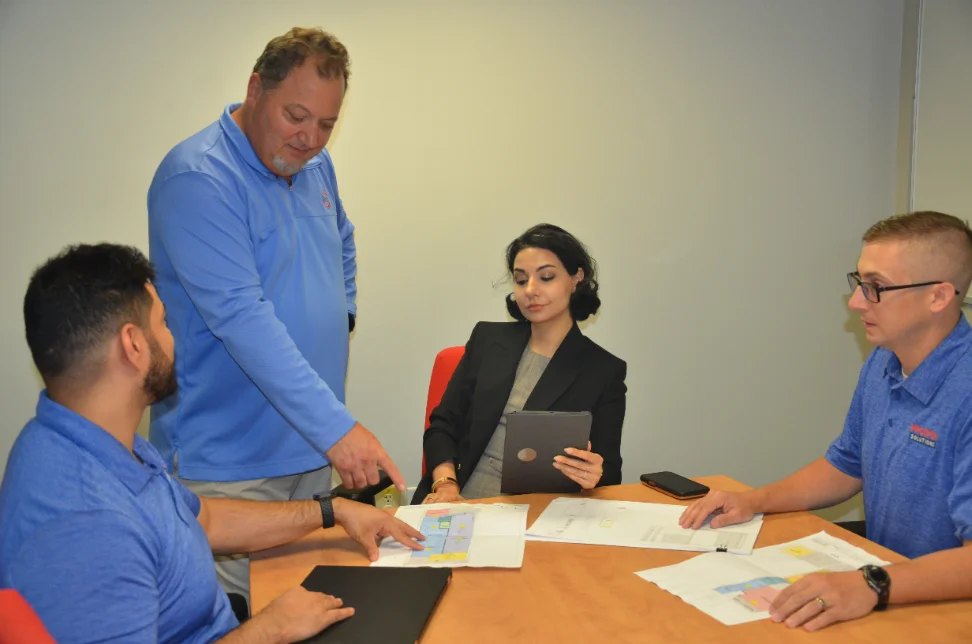
The layer everything else reports into. A fractional CTO, or virtual CIO (vCIO), who sits in your leadership or board meetings, holds the eighteen-month roadmap, and ties every technology decision to risk, continuity, efficiency, and enterprise value.
What it is costing you today
You are making eighteen-month decisions with a ninety-day view of your technology.
AI is already in your staff’s hands and no policy tells them what is acceptable.
Technology spend gets defended line by line at budget time instead of planned once, against outcomes.
A planning horizon shorter than the decisions being made. That is the gap a fractional CTO closes.
How we solve it
- An eighteen-month technology roadmap tied to business outcomes, not product cycles
- Capital and operating budget planning with lifecycle forecasting
- Executive reviews with your leadership team or board
- AI readiness: governance, acceptable use, training, and use cases with measurable return
- Business continuity and audit readiness planned before they are tested
- A risk register that is tracked down over time, with what each closure prevented
- Growth and acquisition diligence: what the systems will cost to run, before you sign
“A true technical advisor, more like a CIO for the building.”
The outcomes every review comes back to.
Whichever part of the stack you engage, the review returns to the same themes. Which one leads depends on your industry, and if you are not sure where you stand on any of them, that is exactly what the assessment is for.
Long-term technology planning
A roadmap that covers the next eighteen months, not the next renewal.
AI readiness
Governance, policy, training, and use cases with measurable return.
Business continuity
The difference between an incident and a crisis.
Audit readiness
Documentation and evidence ready before the auditor arrives.
Compliance
Obligations kept met rather than scrambled for.
Risk reduction
A clear view of where you are exposed, and what we prevented.
Cyber and insurance readiness
Prevention through recovery, with proof of controls for carriers.
Thirty minutes. No sales deck.
The assessment walks every theme above against your actual environment. An advisor names the risk you are carrying and tells you what the next eighteen months should look like. If you should stay with your current provider, we will tell you that too.
Service (617) 369-9977 · Greater Boston · onsite when it matters
Get an executive perspective on one focus area.
Designed for nonprofits, commercial real estate firms, municipalities and governmental organizations, educational institutions, and owner-operated businesses. Each consultation explores one focus area and helps identify your next steps.
Cybersecurity and compliance readiness
Discuss how your organization protects its people, systems, and sensitive information. Explore potential gaps in access controls, email security, employee awareness, and security policies, along with relevant compliance and cyber insurance expectations.
Cloud architecture and IT infrastructure
Explore whether your servers, networks, Microsoft 365 or Google Workspace environment, and cloud services support your operational needs. Identify opportunities to improve reliability, simplify administration, support growth, and address aging technology.
Fully managed and co-managed IT readiness
Evaluate your current IT support model, recurring service issues, and internal capabilities. Discuss whether fully outsourced IT or supplemental support for your existing team could improve coverage, accountability, and service quality.
AI and workflow automation opportunities
Identify repetitive tasks and administrative bottlenecks where AI or automation could save time. Explore practical applications such as document processing, reporting, service requests, and internal knowledge search, while considering data privacy and human oversight.
IT strategy, budgeting, and cost optimization
Connect your technology spending to your organization’s goals. Discuss upcoming investments, licensing, vendor overlap, equipment replacement, and budget priorities to establish the starting point for a practical technology roadmap.
Business continuity and disaster recovery readiness
Discuss how your organization would continue operating during a cyber incident, internet outage, equipment failure, or facility disruption. Explore backup practices, recovery expectations, critical dependencies, and potential weaknesses in your continuity plans.
Technology planning for facilities and expansion
Discuss technology needs for new construction, redevelopment, renovations, office moves, or additional locations. Explore connectivity, cabling, Wi-Fi, phones, security system coordination, and vendor responsibilities to identify requirements early and reduce costly surprises.
Eduverse virtual reality for education demo
Experience how immersive virtual reality can bring classroom lessons to life. This 30-minute demonstration introduces educators and school leaders to Eduverse and explores opportunities for virtual field trips, interactive learning, and student engagement. Discuss potential classroom applications, teacher support, and the technology needed to launch a school pilot.
What to expect: a focused discussion of your current situation, initial observations, and recommended next steps. Each session is a preliminary consultation; technical testing and formal audits can be scoped separately.
The questions we actually get asked.
How we work, what it costs, how quickly you hear back, and what the first ninety days look like. Plain answers, including the ones that are not entirely in our favor.
What is the difference between a managed service provider and what you do?
An MSP is measured by tickets closed. We are a technology advisory firm and Business Solutions Provider: we take ownership of your systems, security, and planning, and we are measured by risk reduced and value created. Managed IT is part of what we deliver, not the whole of it.
How quickly will I hear back if I get in touch today?
A technology advisor responds the same business day, and usually within a couple of hours. The person who replies is the person who will walk your environment with you.
What does the first conversation involve?
A technology assessment. Thirty minutes to start, no sales deck. An advisor walks your current state, names the risk you are carrying, and tells you what the next eighteen months should look like.
Do we have to replace our internal IT team?
No. Co-managed IT is one of our most common engagements. Your team keeps the relationships and the institutional knowledge; Prosper brings the bench, the escalation path, and the strategy layer behind them.
How is this priced, and how long is the commitment?
Prosper scopes to your environment and the outcomes you need, then tells you what it costs and what it covers before you commit. Agreements are annual by default because the planning work pays off across a year.
What do the first ninety days look like?
Documentation and discovery first, then the highest-risk gaps closed in priority order, then your roadmap and budget presented to your leadership team.
What happens to our current provider?
Prosper handles the transition, including asset and license recovery, credential handover, and documentation. If you should stay where you are, we will tell you and you will still have the roadmap.
Are you onsite or remote?
Both. Remote when remote is faster, onsite when it matters. Prosper is based in Saugus and works across Greater Boston and eastern Massachusetts.
What are your hours, and what about after-hours?
Business hours are covered by your named team, with defined after-hours escalation written into your agreement.
Who will we actually be dealing with?
A named advisory team, including the advisor who holds your roadmap. Twenty-five years in business with client relationships of twelve, fifteen, and twenty-four-plus years.
Compliance, funding cycles, and the questions only your industry gets asked are answered on the Industries pages.
Nonprofit, commercial real estate, municipalities and governmental organizations, educational institutions, and owner operated business, each with its own problems, regulators, and proof.
Book a session and ask directly. You will be talking to a technology advisor, and if the answer is that we are not the right firm for you, we will say so.
We are one call from a straight answer.
Give us a call or send a message. A technology advisor replies, not a form-response queue.
999 Broadway #304, Saugus, MA 01906
Serving Greater Boston and New England
Send us a message
Tell us what is not working. We will come back with what we would look at first.
Or book a session directly